Creatine for Women: What It Actually Does
Summary
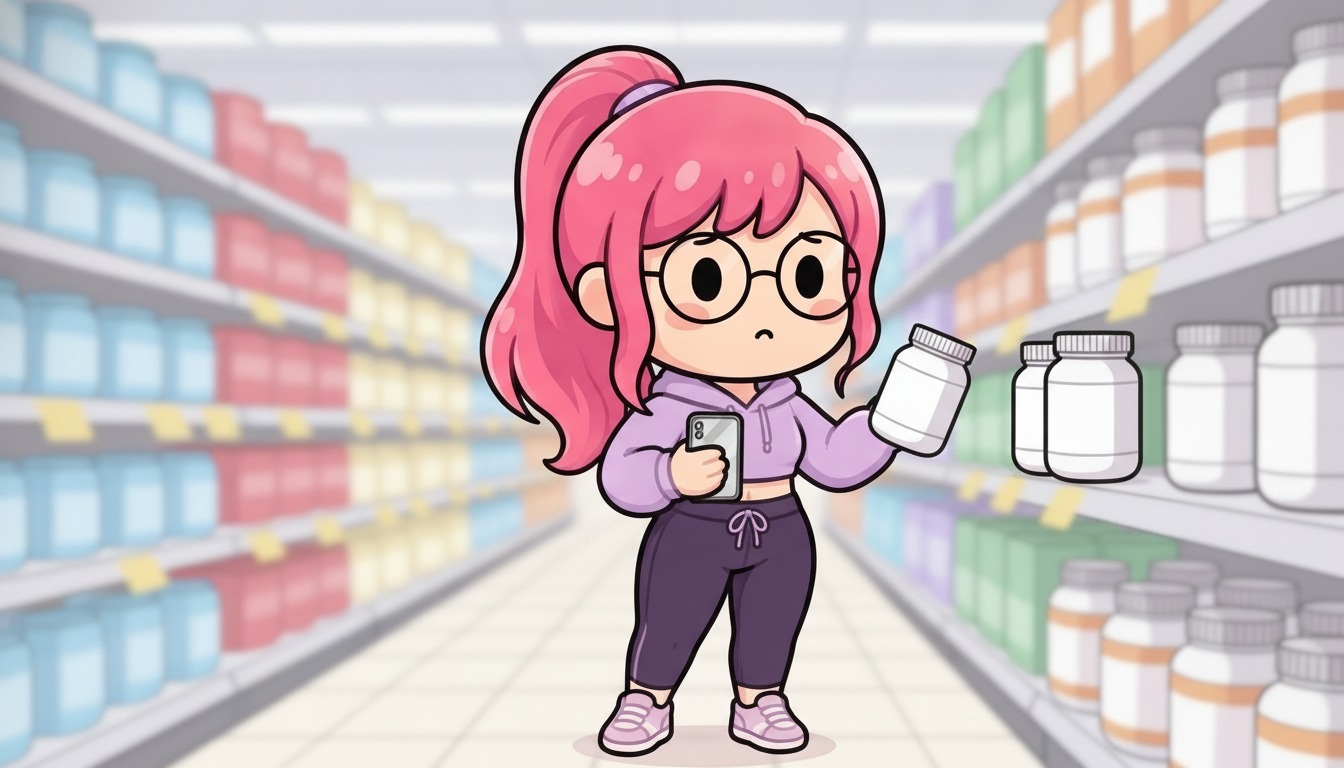
You are standing in the supplement aisle, comparing two tubs of the same white powder. Creatine.
You are standing in the supplement aisle, comparing two tubs of the same white powder. Creatine. A year ago, this was your gym-obsessed cousin's thing, kept in a giant jug next to the protein.
Transcript
Read the full transcript
You are standing in the supplement aisle, comparing two tubs of the same white powder. Creatine. A year ago, this was your gym-obsessed cousin's thing, kept in a giant jug next to the protein. Now it is being sold to you, specifically, as a women's wellness must-have. And in the very next video, someone warns it will make you bulky, wreck your kidneys, or throw off your hormones.
So which is it? Is creatine a quiet, well-studied training aid, or the magic powder that supposedly fixes your body, your mood, and your hormones all at once? That gap is the whole reason for this video. Creatine is one of the most researched supplements we have, and most of what it genuinely does is narrower and calmer than either the hype or the fear will tell you. So let's sort out three things: what it is actually good at, what it does not do, and who should check with a clinician first. No before-and-after photos, no scare tactics, just the evidence for adult women.
Creatine is neither exotic nor new. Your body already makes about a gram a day, and you get a little more from foods like meat and fish. Most of it is stored in your muscles, where it does one specific job. It helps your cells quickly regenerate their fuel for short, hard efforts, like the first few heavy reps, or a sprint for the bus. The stored form is called phosphocreatine, and it recharges that fuel within seconds, then runs down and refills again. That narrow mechanism is the key to the whole topic. And here is a piece both sides tend to skip. Women usually start with lower creatine stores than men, with reviews putting them somewhere around seventy to eighty percent lower, which is part of why researchers find creatine interesting for women.
So why is the story so confusing? Because creatine has been sold in two opposite costumes. For decades it was a bodybuilding powder, where the bulky fear was born. Lately it is a women's wellness product, where the fat-loss and hormone whispers sneak in. Same molecule, two marketing stories, and the real evidence sits quietly in between. One practical note before that evidence. The form with almost all the research behind it is plain creatine monohydrate. The pricier versions are not better, and there is no special women's version. It is the same molecule in every tub.
So what does creatine actually do? Not a dramatic before-and-after. It is a set of specific, measurable training effects. Paired with training, it reliably improves strength, power, and your ability to repeat short bursts of hard effort, and it helps you get a bit more out of resistance training over time. That includes studies in women now, not just men. For years the research skewed toward men, and the newer, women-specific studies have mostly pointed the same way. On any single day it can look small, a little more force on a hard set, one extra clean rep. But over weeks, those extra reps add up. The effect is a steady nudge over months, not an overnight change.
What it does not do is boost pure endurance, so for a long, steady aerobic effort like distance running, it is of little value. Think of it as a tool for the punchy stuff, not the marathon. The dosing is refreshingly boring: about three to five grams of monohydrate a day, taken consistently. You may have heard of a loading phase, around twenty grams a day for five to seven days, but that only saturates your muscles faster and is completely optional. You can take it with or without food, at whatever time of day fits your routine, since consistency is what matters. And creatine works alongside your training, not instead of it. On its own, without the work, a daily scoop does very little. The benefit builds gradually with daily use, not on the first day.
Now for the myths, where the loudest claims fall apart. Start with fat loss. Across a wide range of studies, creatine does not increase fat mass, and it does not melt it off either. It is simply not a weight-loss product. Then that jump on the scale. If the number climbs a pound or two in the first week, that is not fat. It is really just a little water pulled into your muscle cells, and it soon settles. Your muscles are just slightly better hydrated. For most women that early change is minor, and it is not a sign anything is wrong.
On hormones, creatine is not a steroid and not a hormone. The evidence does not show it raising testosterone or the hormone D H T, and despite the worry that keeps getting passed around, it does not show creatine causing hair loss or baldness. And the big one, your kidneys. In healthy people, at normal doses, controlled research does not show creatine harming your kidneys or your liver. It has been studied safely even at very high doses, up to thirty grams a day, for as long as five years, far more than the few grams most people take. That long track record is a big part of why it is considered so safe for healthy people.
So is it the same for everyone? Not quite. People respond differently, depending partly on where their stores begin. If you eat little meat or fish, you may start lower and notice more, and some people are simply lighter responders. That means you might not feel a dramatic switch flip, just a steady background advantage in your training. Life stage matters too. In postmenopausal women, researchers have looked at higher doses, around a third of a gram for every kilogram you weigh. Paired with resistance training, those have shown benefits for muscle, and some favorable effects on bone. That is a smaller, still-growing area, at a higher dose than the everyday amount.
There are also early, unproven signals around mood and thinking, so treat those as a maybe, not a reason on their own to start. And a few people should talk to a clinician before starting. If you have kidney disease or reduced kidney function, if you are pregnant or breastfeeding, where the human evidence simply is not there yet, or if you are under eighteen, make it a conversation with a professional first.
Here is the calmer, more accurate label. Creatine is a well-studied training aid. For adult women who lift or do short, intense work, about three to five grams of monohydrate a day can support real strength, power, and training gains. The early bump on the scale is water, not fat. You earn the results with the training; creatine just helps them along.
It is not a steroid, not a hormone fix, and not a fat-loss product, and for healthy kidneys it carries a strong safety record. It is not magic, and it is not the villain either. It is a modest, reliable helper for the work you are already doing. If you already train, I would love to hear what you actually noticed after a few weeks.
Sources & further reading
The claims in this episode are checked against these sources before publication. Evidence changes; if an important source is superseded, the entry gets updated and the date above changes.
- Dietary Supplements for Exercise and Athletic Performance - Health Professional Fact SheetNIH Office of Dietary Supplements
- International Society of Sports Nutrition position stand: safety and efficacy of creatine supplementation in exercise, sport, and medicineJournal of the International Society of Sports Nutrition (Kreider RB, et al.)
- Creatine Supplementation in Women's Health: A Lifespan PerspectiveNutrients (Smith-Ryan AE, et al.)
- Common questions and misconceptions about creatine supplementation: what does the scientific evidence really show?Journal of the International Society of Sports Nutrition (Antonio J, et al.)
Take the next step
Food questions get easier once your week has structure. The Her Body Baseline maps your current routine in seven days.